
One of the very best things you can do to give your cat a long and healthy life is to ensure that he/she is vaccinated against common feline diseases. Your cat's mother gave her kitten immunity from disease for the first few weeks of existence by providing disease-fighting antibodies in her milk. After that period, it's up to you - with the help and advice of your veterinarian – to provide that protection.
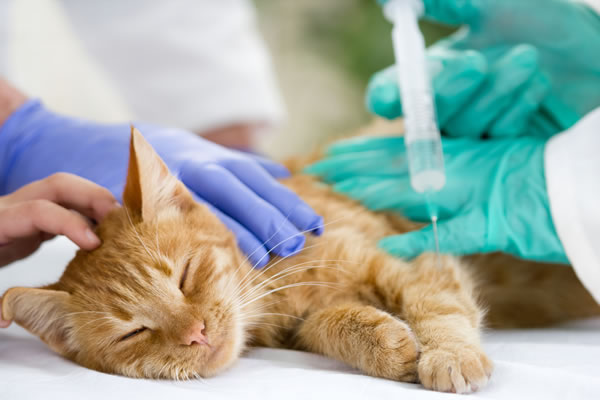
Vaccines contain small quantities of altered or "killed" viruses, bacteria or other disease-causing organisms. When administered, they stimulate your cat's immune system to produce disease-fighting cells and proteins - or antibodies - to protect against disease.
Generally, the immunity that a kitten has at birth only lasts for a few weeks. It is then time to begin vaccination. The first vaccination is usually given in two doses, the first dose at around the age of 8-10 weeks and the second about 3-4 weeks later. Thereafter, your cat will require annual 'booster' vaccinations for the rest of his/her life to maintain protection. Of course, these are only guidelines - your veterinarian will be able to determine the exact schedule that's right for your pet.
After evaluating your cat's particular situation and risk factors, your veterinary surgeon may also recommend vaccination against other infectious diseases. These might include:
This bacterial disease is responsible for 15 to 20% of all feline respiratory diseases. It is extremely contagious, especially in young kittens and the infection rate is very high. It causes a local infection of the mucous membranes of the eyes but may also involve the lungs. Chlamydiosis can be transmitted to humans by direct contact. Vaccination is the preferred method for prevention.
This incurable viral disease affects the central nervous system of almost all mammals, including humans. It is spread through contact with the saliva of infected animals through bites or any break in the skin.
Your pet should be protected against those diseases which are most common, highly contagious and which cause serious illness or death. Such diseases include Feline Panleukopenia, Feline Viral Rhinotracheitis, Feline Calicivirus, Feline Leukaemia and Rabies. Feline Chlamydiosis may also be recommended, based on your veterinarian's evaluation of the risks posed by such factors as your cat's particular heredity, environment and lifestyle.
|
Feline Viral Rhinotracheitis |
|
Feline Calicivirus |
|
Feline Panleukopenia |
|
Feline Leukaemia (FeLV) |
Like any drug treatment or surgical procedure, vaccinations cannot be 100% guaranteed. However, used in conjunction with proper nutrition and hygienic conditions, vaccination is clearly your pet's best defence against disease. Plus, when you consider what treating a serious illness can cost you and your beloved cat in terms of both money and distress, prevention through vaccination is extremely cost-effective.

How can
we Improve?
We would like to know from you what we can do to make our services even better. We invite you to make contact with us and share your ideas, we would be extremley appreciative of your feedback!

If you keep a goldfish in a dark room, it will change its colour & become white.